By the time of Newton it was already known that the planets revolve around the sun, with measurements, and it was possible to predict where they would be in the future (flerfs just say "nuh-uh" but can't predict the location of planets, even if they are just "lights on the dome"). What Newton added was an explanation of why it works like that.
Friday, June 18, 2021
Physics for Flerfs 4, "Motion Under the Action of Gravity"
Fisking "Gleason Flat Earth Map-True!"
So this video was posted to Official Flat Earth & Globe Discussion.
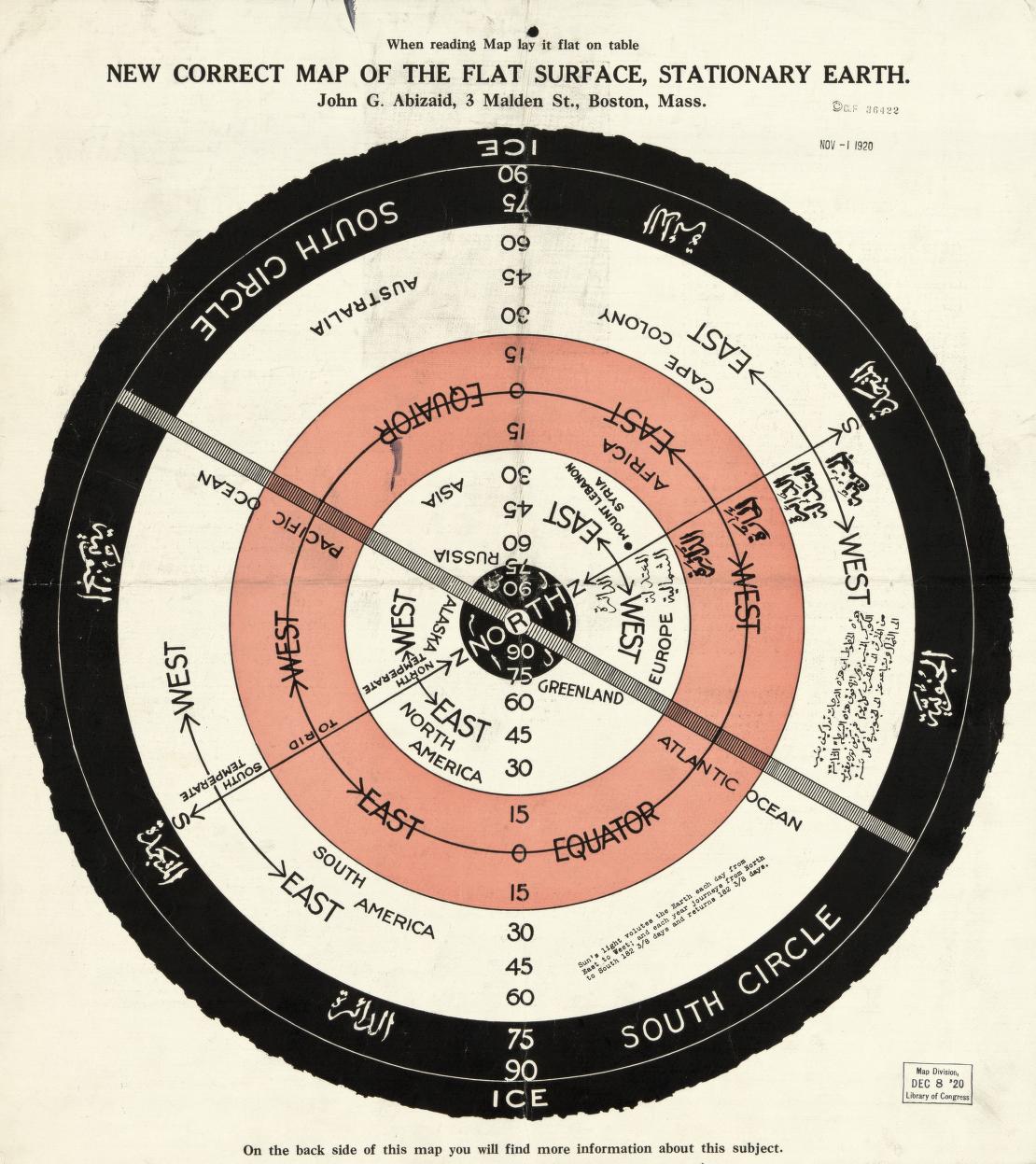
He says he will explain why the Gleason map is accurate. He compares Australia on Gleason and Google Earth, or the globe if you will. They look different (we noticed). But the features of Australia are the same on each map, and he points to something near the Tropic of Capricorn meets the west coast of Australia, and everything has the same coordinates (yes, Gleason has the same coordinates for everything, it wouldn't even be a map projection were that not true). And the same thing happens where the tropic "exits out" on the west coast (he sounds surprised). And this also works where 135°E meets the south coast. How can that be?
Gleason looks like a clock and there's that think in the center that moves and indicates latitude. He superimposes circles every 15° from the North Pole (but takes a lot longer to say that, because he mentions the value of every stop from 90°N to 60°S when there's a skidding sound) Whoa! What happened here? There's more Earth the further south you get, and "when somebody decided to create a globe out of the flat earth" they had to elongate and stretch to make it work because there's 15° missing of latitude.
(I really don't know what he's going on about, 75°S is on the Gleason map. I listened to that part twice to make sure he was saying it. The lines of latitude aren't marked around Australia, but they are along the line of longitude that runs thru Greenland, which Gleason labeled 2PM. 75°S passed thru Antarctica on both his map and on the globe as well as any other projection on a map., see image below, it's from a better image of the map, but the very same map with the Boston Public Library stamp on at 3PM it that I found online. And it's hard to see in the blurry image that YouTube displays, but HIS map also has the same numbers at 2PM, he just didn't notice them)
From what he can tell, and this is just conjecture (his word) they started from the top, the North Pole area and everything got stretched as they got down to the quote unquote South Pole. Everything about this map makes sense. It is a clock and so is the world because the day is 24 hours. Even time zones make sense. He shows an image of the actual time zones and asks which makes more sense, that or this (but fails to explain why he thinks Gleason makes more sense).

Physics For Flerfs 3, Forces and Linear Motion
I split this up over several days, the only response I got from a flerf was "Falling in a circle.. lol", to which I responded that circular motion isn't until Chapter Eight
Physics For Flerfs 2, Uniformly Accelerated Motion.
Physics for Flerfs 1, Vectors and Balanced Forces
Because reasons, I'm a member of a group called Official Flat Earth & Globe Discussion, where flat-earthers (or people who think it's funny to pretend to be flat-earthers) post stupid things, get quickly refuted, but don't understand it, or people who've studied science write about science and the flerfs respond with laugh reactions, incomprehensible memes, quotes from Scriptue, and "nuh-uh". One of the things is that they don't just disbelieve that the Earth is a sphere (or a sphere that's slightly wider around the equator than around the poles, or even one that's slightly larger in the southern hemisphere than the northern), they also don't believe in gravity. So I decided to teach an introductory physics course there to see if they disagreed with anything else.
Fisking "The Lost History of Flat Earth"
So on to his explanation for all the thing he can't understand. Ancient civilizations used flat-earth (henceforth FE) to do all this, and our history is only 200 years old. Does he sound mad? (yes, why did you even need to ask). So you have to swallow this load of unsupported assertions to understand FE. We cannot waste time (which is why this goes on for FIVE HOURS) and he can't tell the truf in a linear fashion. A lot of history is guesswork (what then would be the right label for this? Historical dadaism?). A quote from "a so-called Napoleon" about history being agreed-upon lies.
Don't settle for less
How do we do it
Volume! volume!
Turn up the volume! - Tom Waits, "Step Right Up"
We're up to Episode III, "Inheritors of Mud and Magnificence". Nope, I didn't record the previous section titles. OK, they were Volume I, "Buried in Plain Sight", Episode I, "Questioning His-Story", and Episode II, "A Lens into the Past"
Sunday, October 20, 2013
Jerusalem Municipal Election Debate, October 17
The candidates were mostly party heads, two lists sent people from lower down on the list. First they got up and briefly introduced themselves, I didn't write what they said then because I was taking pictures, which are on Facebook. In the order that they were called on to speak, they were (with the letters on their ballots next to their names)
נר Roi Folkman, #6 Yerushalayim Tatzliach (Nir Barkat's list)
ץ Naomi Tzur, head of Ometz Lev
מחל Hila Yedid Barzilai, #7 Likud-Beiteinu (Moshe Leon's list)
ים Rachel Azaria, head of Yerushalmim (I'm voting for this list)
מרצ Pepe Alalú, head of Meretz Havoda
ק Aryeh King, head of Yerushalyim Meuchedet
טב Dov Kalmanovitz, head of Habayit Hayehudi
הת Ofer Berkovitz, head of Hitorrerut
The first part of the debate was about religious/secular issues.
The Likud speaker was asked whether the party is haredi or dati/secular. She said that it supports the status quo, what is open will remain open. Aryeh Deri (whose Shas party is supporting Leon) is not their spokesman. Asked if Moshe Leon actually lives in Jerusalem she said he was selected by the primaries process and if he was not eligible to run for mayor he would have been disqualified then.
The Barkat speaker (I'm going to use that instead of Yerushalayim Tatzliach) was asked about Cinema City (which Barkat has supported not opening on Shabbat), and he didn't quite answer that question, instead he said that there will be no incursions of religious institutions into secular neighborhoods and entertainment on Shabbat will continue. Why do some chassidic groups support Barkat? He hopes the pluralistic parties will get more seats but Barkat needs a large party to resist haredi pressure (that wasn't exactly an answer either, so much as he needed to get that said).
The Hitorrerut speaker said that Barkat will be better able to resist haredi pressure if you vote for the pluralistic parties and said that his party had kept Ramat Sharet from going haredi.
The Yerushalmim speaker mentioned the fight against exclusion of women (a term which I've heard her credited for bringing from academic articles into political discussions), fight extremists, strengthen moderates. As an example of strengthening haredi moderates she said she had helped with a haredi school that will prepare students for matriculation exams.
The Bayit Yehuda speaker said the party has a new message, it is inclusive, is a bridge between religion and secular parties. Asked why religious voters should vote for him when all the lists have religious people he said this is a problem, they should be unified, which sounded to me like he was saying that all datiim ought to support his party.
Meretz: we opened the city on Shabbat, restaurants, movies, entertainment, the Karta parking lot. There should be shared taxis on Shabbat but they will not put discos in haredi neighborhoods. Cinema City should be open on Shabbat.
Ometz Lev: for 15 years haredi schools have been taking over dati/secular schools, we're a diverse list with datiim, a sefardi woman, and a woman rabbi.
King: Agrees with previous speaker that haredi takovers of schools is a problem but the reason is that they weren't given enough schools in their own neighborhoods. Atarot airfield should have been turned into a Jewish neighborhood, but it wasn't, so they have to try to take over secular areas.
The next section was about employment and housing.
Berkovitz was asked: your list promised to work against ghost apartments (apartments bought by people who don't live in the country and keep them empty most of the time) but the number has increased. He said that they're raising taxes on them and want to tax other unoccupied property (like uninhabited buildings which currently are exempt from tax) so the owners will renovate them and sell/rent them.
King asked Berkovitz about building in East Jerusalem, Berkovitz's answer was unclear (I wrote "waffle" in my notes).
Kalamovitz said he is an accountant, there is not enough money, the problems need help from the national government and his party holds the housing ministry and other useful ones
Alalú said build 5,000 units in the Talpiot Industrial Zone.
Folkman said he hopes the Bayit Yehudi ministers work for everyone and that this is not a banana republic. There should be more places to work for Arabs and Haredim, small apartments and rentals should be built for young families, about 2,000 apartments were built but this is not enough, existing buildings should be expanded or demolished to make room for more units.
Azaria said that there are empty units in unattractive neighborhood like Talpiot Mizrach and Gonen, so she is working to improve things like schools so people will want to live there, sort of like New Yorkers can live in Brooklyn and commute to Manhattan.
Tzur: the problem is demand, not supply, the construction industry waits for demand before building, make people want to live here. The railway park improves the quality of life.
Barzilai: Leon raised money when he was head of the Jerusalem Development Authority and will continue if he is mayor.
The next section was about transportation, property tax, and sanitation
Barzilai continued that Leon will raise money to increase the sanitation budget. Asked about an election poster that says that Jerusalem has property taxes like Manhattan and services like Damascus, but isn't that because her (haredi) voters don't pay property taxes. She said they are exempted according to law. It should be easier to get building permits.
Berkovitz: create services to help small business. Property taxes should be reduced for people who can't work, but not for the voluntarily poor. At this point he left to go to another event.
Alalú: the Interior Ministry got in the way of reforms, such as updating property tax rates in changing neighborhoods. People used to go to Tel Aviv for entertainment. We need to help students find jobs so they will stay in the city.
Tzur: improve sanitation by fining litterers
King: train teenagers to not litter, dumpsters are more important that culture.
Kalamovitz: property taxes do not raise enough money to fund the city, collect it from more residents so we can clean the city.
Azaria spoke about the number two on the Likud list, Dudi Amsalem, who like Leon, does not live in Jerusalem. He currently works in the municipality and she looks forward to how he'll have to leave that job to become a city councillor and will no longer be able to hold up programs approved by the council.. Bus lines should be rearranged so they don't mostly head into the center of town to make it easier to get crosstown faster.
Folkman: transportation problems were inherited from previous administrations. There should be more light rail lines (someone from the audience shouted out, and run by a different company, he said he agreed but didn't know if that would be possible), and sanitation should be privatized.
The next round was about who each list supports for mayor.
Barzilai was asked "why an accountant from Givatayim" (which is where Leon is from), she said look at his resume (someone from the audience shouted, also his criminal resume).
Folkman: Barkat kept a coalition together, engages in honest politics
Alalú: most of us (in his list) are for Barkat but he's not for either. Palestinians are 37% of the population but get 13% of the budget, sanitation is much worse in Arab neighborhoods.
Tzur: I support Barkat, but no party endorsement. Neither mayor's list has a woman before position six. Half of the council should be women.
King: we had three parlor meetings in East Jerusalem, he doesn't trust Barkat who he calls a leftist. The party isn't endorsing anyone, he will vote for Leon.
Kalamovitz: polls show the datiim support Barkat (which wasn't quite the question). When asked who he'll vote for, said "what does it matter?"
Azaria: we had problems with Barkat, but given the choice, we support him. She asked if she could add a word about East Jerusalem, when the moderator said "just one word", she said just "yes", which wasn't very clear.
After the debate, they showed All The King's Men (the 2006 version). Critics generally preferred the 1949 version.
Thursday, April 04, 2013
Rabbi David Stav at Beit Knesset Hanasi, April 3 2013
I got there not too late, there were no seats on the main level so I went to the women's balcony, where you could only see anything if you sat at the seats immediately next to the edge of the balcony which also were full. I had to stand in the aisle to take a photo.
RDS said that unlike what people are used to from where they came from, rather than having community rabbis who know their congregants, Israel has state rabbis. It would be impossible for the Jerusalem municipal rabbis to get to know even a small part of the people in Jerusalem and that's why no one minded that the jobs have been empty for years. Jews can only get married through the rabbanut within Israel (but can get married in other countries and it will be recognized here) and this didn't bother anyone when the state was founded. In recent decades, immigrants from the former USSR, from North and South America, and secular Israelis have created dissatisfaction with this system.
Rabbis are political appointees, they are not selected by the communities they are responsible for. Some don't even live where they are rabbis. He told a story of a mayor who did not want the rabbi that the minister (presumably the Minister of Religious Affairs) wanted him to accept, the minister replied that he would pay his salary, and anyway, you'll never see him. Rabbis represent parties, not the people. Cities with secular or national-religious majorities get non-Zionist rabbis.
Examples of how the system fails to work and imposes inappropriate stringencies:
A city turned out to not have an eruv although it once had one. The municipal rabbi said that there was no need for one, because a God-fearing Jew does not rely on an eruv. The result is more people violating Shabbat.
OU dairy products were not allowed at establishments with kashrut supervision from the Rabbanut, because it's not Chalav Yisrael. The basic level of supervision should allow that.
A story of a family of immigrants, the wife converted to Judaism before marriage, but she and her children were made to "redo" the conversion in Israel just to be safe. Years later, one of the daughters is a komanarit (no one in the audience had an English translation for this) in Bnei Akiva (the point of this, I suppose, is to show their integration into the mainstream national-religious community) and wanted to marry a Cohen. The same rabbi who had them do the re-conversion sent her to a religious court, that couldn't reach a decision but said, what's the big deal, let them marry other people. That might be reasonable in a community with arranged marriages but the ruling shows a lack of consideration of how other people live their lives. If we insist that everyone get married through the rabbis they can't act like this. Tzohar wrote a ruling that the original conversion was valid, the re-conversions were unnecessary, and so the daughter could marry a Cohen.
Telling a woman who is already living with her partner before marriage that unless she starts to go to the mikveh it will lead to cancer (and to couples who wait until marriage, that's OK?)
Questions from the audience.
Heter Mechiria? Yes. The pressure to be stringent is not just halachic but also comes from financial interests, such as importers. Rabbi Shlomo Auerbach said not to be stringent or restaurants will give up their kashrut supervision during Shmitah, and find they can get along with out it. This is already happening in Jerusalem. The national Rabbinate left the decision on whether to accept the heter up to local Rabbinates, and farmers went to the Supreme Court which overturned the decision. He also opposes buying Palestinian produce, says this supports murder (applause from the audience).
Why not let the Rabbinate go on as it has and have Tzohar as an alternative? To prevent the people splitting into two nations who can't marry one another.
What about Agunot? Judges can impose penalties against husbands who refuse to grant a Get but are reluctant. Doing so would solve 90% of the cases. He also supports prenuptial agreements but not conditional marriages or hafkaat kiddushin.
Religious pluralism? He is orthodox, will not recognize non-orthodox conversions or divorces but will allow choice. Shoham is 80% secular - really secular, Meretz voters (a suggestion to journalists - interview some of them) and he will support any request to set up a non-orthodox congregation with 40 signatures, which is also the rule for orthodox ones, but they haven't gotten that many. If they do he'll compete by attending simchas when asked, gave an example of a secular family having a Zeved Habat he is attending. This family, he says, will have Bar Mitzvahs for boys in a local orthodox shul instead of going to Beit Daniel in Tel Aviv.
Standards fro community rabbis including mentoring by community rabbis from outside Israel? Yes, but Rome wasn't built in a day.
How to influence the election process for Chief Rabbi? Lobby the members of the election committee talk to Bennet or whoever else you voted for. (I thought the answer was going to be about who would be on the committee, for example there's a discussion going on right now about whether to appoint women.)
A long speech/question, the speaker told how she cried when she found that gay marriages performed abroad were recognized in Israel, what can the Rabbinate do against this and against gay parades in holy Jerusalem? Not a priority, he doesn't plan to address it during his first ten years (which is the length of the Chief Rabbi's term, and they currently aren't allowed to be re-appointed, although there is talk of changing that so the current CRs can continue)
Will RCA conversions be accepted? Yes.
A comment - we have a Haredi CR where I live and we like him. RDS replied that he isn't against Haredi rabbis, he wants rabbis who care about people.
Organ donation? RDS has an ADI card, supports the procedure already approved by the Rabbanut.
Sunday, January 20, 2013
Israeli Election Debate at Jerusalem Great Synagogue, Jan 9 2013
I don't think I've been to the Jerusalem Great Synagogue since the Shabbat it opened, sometime in the 80's, when I stopped in to use the bathroom and stayed for their inaugural kiddush. It was cold inside, I don't know if the heat wasn't on or it takes a long time to warm up, there's a very high ceiling. Or at least where I was sitting.
Each of the speakers got five minutes, then there were questions from the audience, and then the speakers got two more minutes to conclude. There wasn't any explanation (or I missed it) of how the parties that were invited were selected, whether any were excluded, or had been invited but declined to participate. One of the people who introduced the debate, or maybe the moderator, said that debates in English had not been held in some other cities because parties hadn't agreed to participate.
I'm going to just say what candidates are doing now, not give their whole resume.
The Likud-Beitenu list sent Israel's Public Diplomacy (I'm not quite sure what that means, isn't that the Foreign Minister's job?) and Diaspora Minister, Yuli Edelstein, #18 on the list. Although the Likud's campaign has mainly been "vote for us, we're going to win anyway" rather than their record, he spoke about accomplishments of the government and said that this was the most efficient government he has been in and how Israel's economy is in better shape than the UK or France (no figures were given to support this claim). Netanyahu is the only candidate who can resist pressure from the US and UK and a strong "anchor party" will deal with issues.
Labor sent its #2, MK Yitzchak Herzog. Not the former chief rabbi of Ireland and later the British Mandate and Israel, but that's his grandfather. Labor established the state, is the only alternative to the Likud. Social justice, close social gap, reduce burden on middle class. The Labor campaign has been criticized for just speaking about social issues but Herzog also mentioned the two-state solution, to maintain a Jewish majority in a democracy. A ten billion shekel deficit in the proposed next budget (I don't know where we are in the budget approval process right now) was hidden for months. Netanyahu has failed disastrously leading to the UN vote (recognizing Palestine as a non-member state) and Hamas gains.
Naftali Bennet, #1 on the Bayit Hayehudi list (mainly what was once the National Religious Party, but they constantly splinter and recombine with splinters) spoke at this point to show how much he values Anglo voters. The speaker who appeared on the program was Jeremy Gimpel, who Bennet pointed out is the only Anglo in a realistic spot on any party's slate. (I'm not sure if this was a reason to vote for them or just a dig at some other Anglo candidates on the panel who are not expected to get in). (Although Gimpel, at #14, is not a sure thing, either). He told a story about Rabbi Aryeh Levine who said to a soldier that he couldn't see if he was wearing a kippah or not, all he could see from his height was his heart. He wants to remove barriers including those between Jews and Arabs and Druze. He agrees with 70% of what Herzog says (the social issues) but is the Palestinian issue the only one? (Based on the rest of what he and later Gimpel talked about, it seems so). He wants there to be a strong, secure Israel, the Jewish leader of the world, to bring the Haredim and Arabs into society. He vehemently opposes a Palestinian state (applause at this point, his supporters think this, if not the only issue, is the most important one). No one's going anywhere but they can work together and even shop in the same supermarkets.
Dov Limpan, #14 on the Yesh Atid said the Knesset is a place to pass legislation, not just for slogans. 50% of first graders are Arabs or Haredim, he's not against either group but the problem is that they aren't part of society, they need to do the army or national service and then participate in the workforce. Netanyahu agrees with this. The education system needs a complete overhaul to become one of the top ten in the word, Bennet agrees wit this. Haredi schools need secular subjects, secular schools need more Zionism. Soldiers and university students should get housing subsidies. The threshold for getting into the Knesset should be raised.
Alon Tal, #13 on the Hatenua list (which the program listed as "The Tzippi Livni party") spoke about the environment (he comes from the Israeli Green Party which ran together with Meimad in the last elections), not losing the chance for a two-state solution. If you agree with Bennet's opposition to a Palestinian state don't vote for us. Tzippi Livni comes from a Revisionist background (her parents were in the Irgun and she started out in the Likud) and believes we have a right to the West Bank but told of a tombstone in the US West of someone who "insisted on all his rights" or something like that, I didn't write down the exact quote. Holding on to the West Bank will either lead to apartheid or a loss of the Jewish majority. The economy depends on the peace process. He's in favor of pluralism, he's a gabbai at at Conservative shul, his daughter was spit on as part of Women of the Wall. The government has not spoken about segregated bus lines. 800 people die each year from air pollution,.
Laura Wharton, #11 on the Meretz list Elections are for the Knesset, not the government, Meretz values legislation. Agrees with Tal about the two-state solution, it's an illusion that the current situation can go on. Bennet said that there are 1.8 million Palestinians in the territories, she says the number is around 3 million. As Ehud Barak said, the solution is "we're here, they're there". Soldiers should be on the border, not policing in the territories (some applause). No Meretz member has been investigated for a crime. Social justice - stop tax breaks for corporations, spend it on education. A sane, safe country with recognized borders.
Aryeh Eldad, #1 on the Otzmah Leyisrael list and currently a National Union MK (some of the National Union went with the Bayit Yehudi list. The next two candidates on his list are "former" Kach members, also from the National Union.) As a doctor in the burn unit during the 2nd Intifada he decided that instead of treating victims he would move to politics to practice "preventative medicine" (which is probably vague enough to not get disqualified as a candidate). He prevents the creation of a Palestinian state there, he says. The land belongs to us and no one else. Giving away land is based on a "misdiagnosis", the war is a religious war (enthusiastic applause, but two of the right-wing applauders were sitting directly in front of me and it was hard to tell how widespread the applause was.) Jordan is Palestine. Netanyahu favors a two-state solution and so his party will not join the government.
Menachem ShemTov from Shas (If he's a candidate, he's not in the top 16) says Shas is in favor of social justice and is a bridge between extremists from Meah Shearim and the secular because its voters have relatives among both groups. It's not a start-up. There already are two states, Caesarea (a rich town) and Jerusalem. Rabbi Ovadia Yosef's daughter started a haredi college and Shemtov is involved in the Nachal Haredi. (He has nothing to say about the Palestinian issue because he hasn't gotten instructions yet about that, I think.).
By the time for questions, Gimpel is now there in place of Bennet. The first questioner asks each partt to say what they mean by Jewish and democratic and who decides (I think he had more questions but the moderator cut him off, and said that future questions should be directed at only one candidate). Answers: Shas - the Bible. Otzma Leyisrael - the Torah is the common denominator but obligations are important (sometimes speakers will shove their key points in where they don't answer the question, their campaign is about how Arabs, who don't serve in the army, don't deserve rights, without going into specifics, they are vague about how this would apply to Haredim or people who are obligated to serve but refuse, or at least I haven't seen their answer). Likud - quotes Yosef Burg that what's important in Religious-Zionism is the hyphen, all students should visit Jerusalem. Labor - all citizens should be equal and there should be freedom of religion, what makes the state Jewish is symbols and holidays. Social justice is Jewish. Bayit Yehudi - restore Jewish pride. 50% of sodiers have never been to Jerusalem. Yesh Atid - Gimpel would make a great leader in NCSY but don't force his Judaism on anyone. We persecute Russian immigrants as non-Jews after they were persecuted in Russia for being Jews. Meretz - Herzl write a book called "The State of the Jews", not "The Jewish State". Supports culture, tolerance, something needs to be done for the 10,000 couples who marry abroad because they can't marry in Israel or don't want to get married through the Rabbinate.
The next questioner asked the Yesh Atid representative what his red line is about a nuclear Iran, he said we can't tolerate them having nukes but must act together with the US and EU.
Someone asked all the candidates about a personal problem which wasn't clearly explained, he described himself as a stateless person from Egypt, the moderator said this wasn't the right place for that and he walked out, came back in shouting, was shown to the door by a security person, this went on for a while.
For Labor: how to get Abbas to return to negotiations? Herzog started by objecting to Eldad's support for Jordan as Palestine, Abbas strengthens Netanyahu by refusing to negotiate, start from the December 2000 Clinton parameters which would keep Gush Etzion where Gimpel lives before we lose that too. Eldad responded that it was King Hussein who said that Jordan is Palestine.
To the Likud, why did VAT and gas prices rise and corporate tax decrease? Edelstein said that gas recently went down but the press didn't report on that. Socialist overtaxing is counterproductive, the government created 350,000 jobs and a strong Likud will continue economic reforms.
Also to the Likud, will Netanyahu capitulate to foreign pressure on housing starts in the territories, Edelstein cited a Peace Now report about construction during the last four years which he says will continue.
A question about energy policy, Alon (Hatenuah) is in favor of Israel being the first carbon-neutral energy-independent country with renewable energy, Edelstein says that the government created a committee, Yes Atid and Meretz have plans on their websites.
A woman who I had previously noticed reading a biography of Kahane asked why the Levy report (Report on the Legal Status of Building in Judea and Samaria) was not fully translated into English. Edelstein said he would look into it, Gimpel that the real question is why it was not implemented, why did the people elect a right wing government and get a housing freeze? His is the only real right wing party.
Will Bayit Yehudi commit to stay out of the government without a commitment to its principles? Gimpel didn't answer the question but attacked Yair Lapd, head of Yesh Atid as a leftist. Wharton of Meretz said that right wing prime ministers move to the left, perhaps they get wiser with time. Shemtov (Shas) said the issue is bread and butter, not the Palestinians.
That was the end of the questions but the next person in the line to ask questions insisted on asking his, which he had written out in advance, he held up a piece of paper. Throughout the summing-up period and afterwards he would continue to interrupt, a security person stood next to him but didn't show him to the door.
The final remarks were (leaving out what they repeated)
Shas: this was a great show. Don't raise VAT or water prices. 1/3 of the populations is poor. There is no peace and no security.
Otzma Leyisrael: Bilaam said "mah tovu" and Moshe said "am naval" because Bilaam saw from a distance but Moshe knew the people from up close. We sound pessimistic but are not. Netanyahu will be prime minister and Bayit Yehudi will join the government, and he will make them keep their promises from outside the government.
Hatenuah: Alon's daughter is in the army, we should do what we can for peace. Condoleezza Rice said we were very close to an agreement.
Likud: appeasement won't work.
Bayit Yehudi: Netanyahu is great but vote for us to keep him strong. All the leftist and centrist parties are identical.
Yesh Atid: when students were harassed in Beit Shemesh, no help came from Likud, Yisrael Beitenu, or the mayor who is from Shas. They solved it themselves. It's them or Shas in the government.
Meretz: what sort of a country do you want? There are many more ministers here than in the US. Corruption. International backing. The Bayit Yehudi list includes people who think Baruch Goldstein is holy. Respond to the Saudi initiative (this was the only time I remember hearing boos).
Afterwards the guy with the page of questions complained that his question would have only taken 75 seconds to read and there were two minutes left until 10 PM, he read out the first verse of Sh'ma, said there was no democracy and a judicial dictatorship.
I picked up some flyers from parties outside.
Bayit Yehudi's said that if you light candles on Shabbat, not when there's a power outage, we're for you, and "there's room for everyone", including: secular, moshavniks, retirees, drivers (there's an anti-driver party?), graduates of religious high schools for girls, religious people, soldiers, army sergeants, university students (female), women who live in Tel Aviv, new immigrants, grandmothers, kibutzniks, and formerly religious people. Why any of those should vote for them, they didn't say.
Otzma Leyisrael's flyer said that Arabs don't pay real estate tax in Sachnin, income tax in East Jerusalem, or get building permits in Taybeh but Eldad and Ben Ari will cause the law to be applied uniformly. How they'll do that from outside the government they don't say.
Shas had a picture of Ovadia Yosef, saying "Our Master cries and you are asleep", one of his sons woke up at 3 AM and saw him praying and crying.. The other side says that he hardly eats and cries all the time because he knows the dangers to the world of Torah. The Satan uses nice people to get you to not listen to the leader of the generation. All the other parties are against the Torah and the will of God, just like Korach. And it goes on like this for a whole page with not even a tiny bit of Shas' platform, but reveals that "our master" is head of a large (but unnamed) organization that has talked more than a thousand women out of having abortions and he personally has cured tens of thousands of fertility problems by blessing them.
Yesh Atid had a big picture of their leader, Yair Lapid on one side, and actual policies on the other, all of which were mentioned during the debate.
There were more parties outside when I arrived so I might have missed some flyers.